Social Liberal Forum Conference, 2015

Yesterday I went to the Social Liberal Forum conference, held at the Amnesty International Human Rights Action Centre in Shoreditch.

It’s the first time I’ve attended an SLF event, and to be honest I was slightly apprehensive that it would be like a more extreme version of Lib Dem conference.

I needn’t have worried. Although as usual I was initially paralysed by my tendency to shyness, as people arrived things quickly warmed up and conversation began to flow. It was particularly good to meet people with whom I’ve previously enjoyed useful and insightful interaction on Twitter or via blogs, such as Nick Barlow and Kelly-Marie Blundell.

Charles Kennedy and Claire Tyler

The day began with a tribute to Charles Kennedy by Naomi Smith, chair of SLF. Unusually, but appropriately, we were encouraged to express our appreciation for Charles through a round of applause, rather than silence. It was a very moving moment and I could see several people in tears – I was on the verge myself.

This was followed by an interesting Beveridge lecture by Baroness Claire Tyler. She argued for wellbeing as the hook on which we should renew our attempts to tackle the “five great evils”, although she readily acknowledged that the terms Beveridge had used – particularly “idleness” and “squalor” were no longer appropriate for today’s political lexicon.

While very sympathetic to the idea of moving beyond GDP as the measure of political failure or success, which has always seemed entirely inadequate to me, I remain unconvinced that “wellbeing” (or indeed “happiness”) is the right concept to build that idea around. Aside from sounding static, it seems too subjective to sustain hard-edged or challenging policy ideas.

Arguing for Liberty

The conference then broke into several different sessions. It was very difficult to choose between the various topics on offer but I eventually settled for the discussion on liberty, philosophy, policy and the campaign. Speaking were Julian Huppert and, at the last minute, Kelly-Marie, although you wouldn’t have known as she seemed thoroughly prepared and assured.

The discussion ranged across many areas but it became focused in the end upon precisely how liberal arguments could, or should, be made. Huppert eloquently insisted that we should marshal a wide range of arguments – especially those that are not important to us, but will chime with other people’s priorities. He gave the example of same-sex marriage and how, in Coalition, Nick Clegg and Lynne Featherstone had argued for the policy on the basis that it would create more marriages in sum – knowing that this would appeal to David Cameron. (Incidentally, according to Julian, this was also why equalising civil partnerships was not allowed through – because it would have a negative impact on the total number of marriages!)

This led to interesting debate, with some people expressing some reservations about the extent to which we should be pragmatic. Huppert also emphasised the need, alongside this kind of messaging, to take radical stands in order to shift the Overton Window and make space for new policies to become mainstream.

I wanted to ask a question about how a party so reduced in voice could achieve this, and whether new outside organisations such as think tanks would be necessary or helpful in doing so – looking to the considerable influence of institutions such as Policy Exchange and Respublica over David Cameron’s tenure as Conservative leader. Unfortunately some questions and interventions in that session were so long that I didn’t have the opportunity!

Reforming Government and Political Pluralism

After the lunch break I particularly enjoyed a fascinating session on “reforming government”. I felt that the title was rather ambitious given the election result, but the insights from Chris Nicholson and especially Daisy Cooper were compelling.

Chris spoke mainly of his experience as a special adviser to Ed Davey at DECC. He occasionally strayed onto controversial ground, at one point suggesting that too rigid a commitment to evidence-based policy could act as a block on action, as it was used as an excuse to push things into the long grass through endless piloting and rethinking. He also seemed to imply that the back bench committees set up by the party during the coalition had been too focused on holding Lib Dem ministers to account, rather than bringing new and neglected policies to their attention.

Daisy, by contrast, chose to focus her comments on how we could argue for reform better. Her central thesis that arguing effectively for change should be based on pointing out how it gives people more power was appropriately powerful, especially when listing the number of areas of society and economy where power is concentrated in the hands of a very few – the big two political parties mirrored by the big four supermarkets, the big six energy firms, the big four audit firms, and more.

This session was followed by a return to plenary. A panel on political pluralism was chiefly memorable for David Howarth’s rather depressing assessment of the likelihood of any kind of progressive majority developing. (Clue: it probably isn’t ever going to happen, mainly because of the inbuilt tensions that dominate the Labour Party, which are being played out in their leadership election.)

Leadership Hustings

The final portion of the day was allocated to a showdown between the two leadership candidates, Tim Farron and Norman Lamb. I declared my support for Tim a long while ago in a rather overlong post on this blog, but I was interested to see the two men set out their stalls live.

I was unsurprised by the divergence in style and content between Norman and Tim. I felt that Norman was trying hard to inject some passion and charisma into his pitch, leaning hard on his background as a campaigning employment lawyer, as well as his family’s liberal history. But ultimately his speech sounded pretty safe, and didn’t seem to differ at all from the others I’ve read during the campaign.

Tim obviously did the same to an extent, but was more keen to be topical. In particular he drew out some specific and strong liberal positions on recent news stories including the migrant situation at Calais and George Osborne’s announcement on inheritance tax. This felt fresh and relevant in a way that Norman’s pitch had not.

I wasn’t able to stay for all the questions, unfortunately, but the way that both candidates listened and responded to the ones put to them gave me confidence that whoever is the new leader will be keen to hear the views of the whole membership.

Conclusion

This was a really positive day and I’m really glad I made it along. As with many new things, I was a bit daunted at first, especially given the large turnout. But the atmosphere was welcoming and positive, and certainly not factional in any way – I heard a real range of views over the day, and everyone was listened to with respect (sometimes too much, if anything!).

I’d definitely recommend the experience to new members, even if you aren’t sure whether you align yourself with the SLF or any other group. It’s a great way to understand what’s important to different people within the Lib Dems and to benefit from the wisdom and experience of people who have been a force for positive, liberal change in society through their activism and campaigning.

The whole day left me more positive about the future of the party and keen to play a small part myself. If my experience is any indication, the SLF should consider yesterday a job very well done.

Andy Burnham and the Myth of Competence

No, that’s not the title of a new Harry Potter knock-off – although Andy Burnham has the makings of a put-upon junior wizard with numerous chips on his narrow shoulders. Rather, it’s a response to Burnham’s latest contribution to the moribund Labour leadership battle, replicated below for your viewing pleasure:

Now, there are a number of problems with this. Burnham is clearly making a pointed comment about the attempts of other candidates – particularly Liz Kendall, who he probably sees as his main rival – to move Labour back to a position which could be loosely described as “Blairite”.

As an aside, I personally think that with Kendall leading Labour and Tim Farron leading the Lib Dems, the latter party would have vast acres of space to be a real, vote-winning opposition. Tony Blair’s success is often considered solely due to his brilliance as a winner of elections. But this is a hopelessly simplistic view of history, and one that ignores the fact that a donkey in a red rosette – not a proverbial donkey, a literal donkey – could have won in 1997 given the mess that the Conservatives were then in. So it shouldn’t be taken as axiomatic that moving Labour to the centre and to the authoritarian makes the party more electable.

I digress. Burnham, of course, has also rejected that analysis, although in a number of important ways he has indicated that he does want to move the party to what might be considered more Blair-like positions – if only in their tactical ingenuity rather than in their substance. On immigration and Europe, for example, he is tacking close to the Tories, which I suspect Blair might consider good politics if not good policy.

But the line he is trying to hammer in this tweet is silly. And it’s silly because it actually does exactly the thing he claims to want to avoid. The first statement criticises Kendall for “copying the Tories”. But the second line suggests that the measure of a political party’s success is to be “better” than the Tories.

Without further explication, this is a troubling idea – that the viability or the electoral success of a political party is based purely on competence. I have to say that competence is one of the attributes I look for last in a politician. I tend to think that integrity, compassion and a coherent set of beliefs are far more important. With those attributes in place, I would feel relatively relaxed about entrusting the delivery and implementation of policies based upon them to the apparatus of the state.

The myth of competence, though, has infected the whole of our political culture. The irony of Burnham’s statement is that it is a Tory invention – that politics is primarily about management. The genius of it is that by forcing others to fight on the basis of competence, the Tories ensure that everyone is clustered on their natural territory at all times. I’m not talking about political left and right here; it’s far more about semantics and semiotics than anything else.

I haven’t got time to go further into why this is such a damaging concept this evening – perhaps another time – but Andy Burnham really should give some more thought to the matter. His attempt to paint his rivals as soft Tories would be more successful if he didn’t back himself into the same corner in the process.

Some Thoughts on Charles Kennedy

I could hardly say that I knew Charles Kennedy well. I’ve wanted to wait a few days to let the sadness of his passing sink in, and to process just what it is that I loved about the man.

In fact, we only met on a few occasions, and then only briefly, when I was working as a researcher in Parliament. My time in the Palace of Westminster was generally happy, mainly because I was one of the fortunate souls to have a boss that genuinely cared about his staff, and treated them as human beings. Observing other MPs going about their business, I’m afraid to say that many of them simply considered themselves too important to waste time on respecting junior members of staff – often young people – such as me. But on the other side of that coin, they are elected representatives attempting to weigh and reflect the views of tens of thousands of constituents; they are some of the busiest people working in our country. I was forced to recognise that even the apparently lazy ones, such as the MP in whose constituency I had grown up – the safest of Conservative safe seats – were quick to respond to real problems and attempt to deal with them.

Nonetheless, MPs who were at least civil enough to acknowledge your existence were notable by their scarcity. MPs who were kind enough to feign an interest in you, at least for the short period of time you might be in the same lift, or walking side by side through the airy colonnade that connects Portcullis House and the Palace and is effectively Parliament’s pedestrian motorway. Wait there long enough and you’ll see anyone and everyone.

MPs such as Charles Kennedy, who took a genuine interest in you, were – if you’ll pardon the Lib Demmery – gold dust. He made you feel that he had time for you, and he even remembered you subsequently, even if it just meant a small, wry smile as you passed. He was kind. How many people in the public eye could you say that about, with confidence?

Charles Kennedy - h/t Liberal DemocratsI’d call that an unusual mixture of humility and humanity. He had humility enough to remember and honour the value of all human beings. Others pay lip service to that notion; he lived and breathed it.

I first awoke to the fact that I considered myself a Liberal Democrat under Charles Kennedy’s leadership. I had always followed politics with interest but, as I suspect many people continue to do throughout their lives, I always considered it a straight fight between Tories and Labour, certainly throughout the 1990s. I was a fairly well-read child, even in terms of current affairs, but I was only dimly aware of the Liberal Democrats at that time, and even then they were only represented in my mind by the towering but tarnished figure of Paddy Ashdown. I doubt I could have named another Lib Dem besides him until Charles Kennedy’s rise to prominence in the lead-up to the Iraq War.

I marched against that war – the only public protests I have been unequivocal about joining. Given the number of people who were there (perhaps 2 million over two weekends) and the breadth of their backgrounds, the same must have been true of hundreds of thousands of others. For a brief moment, Charles Kennedy’s Lib Dems were the only real opposition to the establishment; it’s often forgotten just how strongly the Conservatives were insisting on a military solution at the time. The Guardian leader reporting on the Parliamentary vote noted this specific curiosity:

A few may even read yesterday’s debate in order to attempt to explain the otherwise inexplicable fact that the Conservative party of 2003 appeared more concerned at such a time to attack the Liberal Democrats than the Labour government.

The fact that Blair was forced to hold a vote at all was largely due to the British people, of course, but it could also be ascribed partly to the courage of Kennedy, as well as the bravery of figures such as Robin Cook. Both men have now died untimely deaths, having spent significant amounts of their adult lives in Parliament.

It should never be forgotten that Charles and the Lib Dems were on the right side of that debate. It is still the defining moment of my political life, the most disastrous foreign policy decision made by a government in my memory, and, perhaps above all, a permanent monument to the failings of a political system that favours patronage, party loyalty and “stable government” over truth, honesty and wisdom.

The impact of the Iraq war still reverberates today in all sorts of ways. It defines UK foreign policy, which has become parochial, insular and tentative. We no longer wield the power and influence we used to wield. We would prefer to debate Trident from the point of view of its narrowly political relevance than from the point of view of international relations and military might.

Standing for freedom, wisdom and sceptical internationalism, and against political triangulation, vested interests and deceit: that is what drew me to Charles Kennedy’s Lib Dems.


I didn’t really know him, but I know the impact he had on me. He taught me that politicians could be really human and really brave; that you could be a leader and still come across as a warm, intelligent, curious person, with real flaws; that liberalism had a part to play in real decisions that had a major impact on real people.

At the top of this post I said that I wanted to process what it was I loved about the man. If it’s anything, it’s this: that he was real.

Political & Constitutional Reform Committee: Another Early Victim of the Great Liberal Defeat, 2015

The news has just broken that the Political and Constitutional Reform Committee has been abolished, following meetings between the party whips.

The Committee was established in 2010, mainly in order to scrutinise the work of the Deputy Prime Minister Nick Clegg, who had responsibility for a host of reforms – so many, in fact, that he infamously suggested we’d get “the biggest shake-up in our democracy since 1832“.

As it turned out, of course, most of these reforms either failed to materialise, or were rejected. The only one that has remained in place that I can think of is the Fixed Term Parliaments Act, and one can envisage a situation where even that is under threat.

This is not the point, though.

The Committee got through a prodigious amount of work between 2010 and 2015. It was arguably one of the most active and conscientious committees in Parliament.

Now it is being abolished, in the face of an obvious need to retain Parliament’s ability to scrutinise matters of political and constitutional reform. Perhaps the whips from the Conservatives and Labour don’t think it’s worth having such a body in place in order to deal with – oh, I don’t know – Scottish devolution, an EU referendum, and constituency boundary changes to name but three.

The argument might run that these issues would be better dealt with by other Committees. There is a Scottish Affairs Committee, for instance, that will be doing work on devo max and full fiscal autonomy. The Foreign Affairs Committee, too, might suggest it is well placed on European issues.

But the reality is that a committee dedicated to thinking about and suggesting alterations to the fine detail of political and constitutional reform – which will inevitably eventuate from these processes, whether or not we see the seismic shifts that are possible were we to leave the EU – is a very sensible idea.

Moreover, I tend to the view that the more bodies available to challenge government policy and suggest improvements, the better.

The reality seems to be that this is yet another early casualty of the Lib Dems’ lack of Parliamentary representation. How many more times will we have to point to a lack of liberalism within the House of Commons over the next decade?

EDIT: The other thing about this is that it is a direct slap in the face for the 477,000 who signed the Electoral Reform Society petition on voting reform, which was only delivered to Downing Street on Monday, supported by the Lib Dems, Greens, UKIP and others.

“No-one wants them” – BBC on stranded refugees

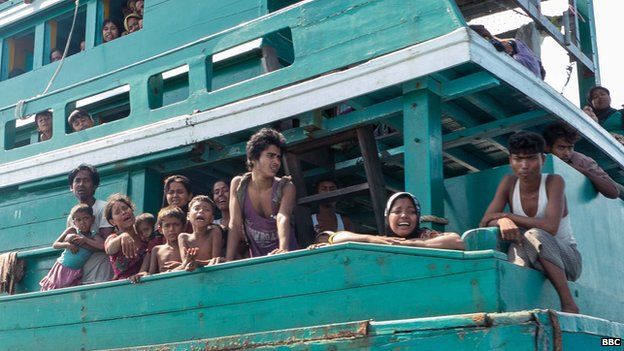
The BBC reported today on a boat filled with desperate people in the Andaman Sea. Apparently ten people on the boat have already died from starvation or dehydration, while others are resorting to drinking urine. 350 Rohingya people, from Myanmar, are said to be aboard, drifting, having been refused entry to Thailand.

This is just one of many such boats currently drifting off the coasts of Thailand, Indonesia and Malaysia. The Rohingya are one of the most oppressed ethnic/religious minorities in the world, having no recognition as citizens in Myanmar, and therefore having experienced constant persecution.

According to the BBC’s Jonathan Head, who can be seen in a video at the top of that report, “no-one wants them”. It’s quite striking when a journalist feels able to make that kind of judgement. But that is the world we live in.

Closer to home, meanwhile, the European Union has this week announced a new approach on its own “migrant” crisis, which follows the decision to scrap Mare Nostrum in October last year. This involves a new quota system aimed at allowing in a higher number of people (20,000 over two years) and distributing them fairly across member states. Even this reasonably moderate proposal was met with total rejection by Britain’s Home Secretary, Theresa May, who claims that these people leaving war-torn countries and despotic regimes are merely “economic migrants”, and that we shouldn’t encourage them.

The EU’s approach also contains some far more worrying plans. In particular, the proposal for a “military campaign” to “smash” smuggling networks should strike fear into the heart of any reasonably compassionate person. The Guardian reported that this would be at least an air and naval campaign – but that it might also include “a presence ashore”, which is a quite spectacularly horrifying euphemism.

This is all awful, of course. Both situations have been created by a lack of liberty – both in terms of the countries from which these people have already fled, and in terms of the response from the rich old nations to which they want to flee. The solution cannot lie in reducing freedom yet further. Whether it is Indonesia or Britain, the reality is that by turning such people away, you are actively choosing to contribute to their deaths.

Moreover, “cracking down” on the smuggling networks – as I’ve suggested before – is meaningless without providing a legal, safe alternative. It is not as if these people want to use such networks. They use them because they have no other choice. The smuggling networks are a classic black market, created by prohibition; they’re the equivalent of bootleg liquor or cocaine cut with ground glass. Except instead of intoxicants or narcotics, these people just want to live in a place that isn’t so irredeemably screwed up beyond repair that their very lives are worthless. And they’re willing to do anything – literally anything – to get to that place.

Any of us would do the same. And this is the biggest irony of all. The very hope that these people embody is another side of the “aspiration” that conservatives preach to their citizens. The same hope that drives people to get into rickety boats and drift for weeks without food or water is what is supposed to drive people in UK JCPs to keep applying endlessly for the same McJob.

It doesn’t seem to have occurred to conservative, aggressive, anti-immigration governments that shutting these people out doesn’t just tell them no-one wants them. It sends a message to anyone without hope: get out and stay out, because we don’t want your type here.

What Kind of Leader Do the Liberal Democrats Need?

How We Got Here

This is a fairly long summary of the Clegg leadership of the Liberal Democrats, 2007-2015. If you want to skip to where we are now, and the real answer to the question posed at the top of this post, then scroll down to “Where We Should Go”.

I wasn’t around for the last Lib Dem leadership election, in 2007. At that point I was still at university and had shied away from student politics. I am reliably informed that it was a very close race between Nick Clegg and Chris Huhne, one that famously turned on the failings of the Royal Mail. Clegg and Huhne

I still believe that the choice the Lib Dems made at that election was the right one, regardless of what subsequently happened to Chris Huhne. On balance, Nick Clegg led the party with decency and endeavour, and succeeded in what was clearly his main goal – putting the party in a position to enter government.

Perhaps that sentence reveals the problem with his leadership, though. At its heart, Clegg’s leadership always felt responsive, if not reactive. The only time it felt like he was truly setting the agenda was in 2010, at the height of Cleggmania. But even then, the Lib Dems’ campaign felt strangely weightless, and defined the party largely by comparing it favourably to others – most of all by claiming the moral high ground and emphasising that there would be “no more broken promises“. The failure to set out a convincingly liberal case, promoting the party on its own terms, may have been one of the reasons that the “surge” fell away on polling day – although there were any number of other factors, including a traditional third party squeeze as the desire to force Gordon Brown out of office, or keep him there, took its toll.

Fast forward five years, and the circumstances were very different – on the surface. We had spent five years “enabling” the Tories to form a government, although Lib Dems, and increasingly others, recognise that much of the substance of the coalition came from our side. Unfortunately, the strategic choice to treat coalition as an end in itself – mainly by defending and “owning” all the policies decided upon by the whole government – was decisively wrong, and again, strangely negative. It would inevitably undermine our independence as a campaigning party, even without the obvious tactical errors that so badly tarnished our trustworthiness and integrity in the eyes of the voters.

Clearly, the 2015 campaign was far more focused on positioning the party to enter government for a second time. This was a catastrophic error, which played into the hands of squeeze messages from the two big parties, especially the Conservatives. Others have already analysed the movement of former Lib Dem voters, which seems to have been mainly towards the Tories in key seats. When the question being asked is “security” vs “change”, trying to position yourself as a little bit of both was always doomed to fail.

This failure was compounded by an even more insubstantial policy platform than had been the case in 2010. Our policies this time around appeared designed to appeal either to the Tories or to the Labour Party in the event of coalition negotiations. This was made worse by Nick Clegg’s insistence during the campaign on speculating on the constitutional intricacies of the potential result. The campaign was almost entirely negative, and based on a self-defeating and depressing centrism.

A final point is that Nick Clegg’s approach to leadership was characterised, in my opinion, by too ready a tendency to surround himself with like-minded people. This is something Michael Dugher criticised Ed Miliband for in an interview in the New Statesman today. But my perception is that it was just as true of Nick, whose advisers were generally young, personable and keen, but may have lacked the kind of campaigning experience and political nous we needed. The same could be said of his approach to coalition negotiations: the team in 2010 was Laws, Alexander, Huhne and Stunell. The reluctance to draw on the experience of older, wiser heads – such as Vince Cable, Menzies Campbell and Charles Kennedy – was palpable, and continued into government, with the marginalisation of Vince at the 2013 party conference particularly egregious.

And that’s a quickish summary of how the Liberal Democrats ended up where we are today: reduced to a rump of 8 MPs, with a combined majority of fewer than 25,000 votes, and continuing to see our local councillor base eroded. Notwithstanding the vast number of new members being added daily since the general election result became painfully obvious, we remain a party that has lost its way.

Where We Should Go

It seems abundantly clear to me that the party needs a fresh start. David Howarth has written eloquently on Social Liberal Forum about the need to clarify our values:

Clarify our values – We are a party of values or we are nothing. An effective party of values, however, needs to do certain things. The most important is to achieve clarity about its values… Some of our values are clear –  internationalism, protecting individuality and non-conformity, hating bullying and the abuse of power,  promoting environmentalism, protecting civil liberties and a love of democracy… But some of our values are not clear. Most significantly, what is our view of economic inequality?

While I didn’t agree with everything David wrote in that article, this point is absolutely vital for the party to grasp. We cannot go on fighting from election to election on the basis of what other parties decide to know.

We must instead understand the values that are fundamental to the party’s existence. This is the only way we can create a compelling story to tell voters – one that isn’t reliant on a position of negative moderation.

To me, that should include a commitment to freedom at the core of everything we do. And yes, that should include maximal economic freedom for every citizen. I haven’t yet fully thought through what this might look like, but I think starting from the point of view of individuals is vital in order to counteract the deadening influence of today’s political discourse. We need to get much more acute in describing what we imagine will be the impact of policies: this requires creative thinking. Perhaps a start would be to identify a few party members of wildly different backgrounds and tell each of their stories under a Lib Dem government.

And yes, it’s also time we started talking about a Lib Dem government again. The purpose of campaigning is not to give in to the assumed outcome. Even if you are expecting a hung parliament, the best negotiating position is to have a set of strong, majoritarian policy positions from which to start.

This doesn’t mean trashing our record in coalition. But it does mean reappraising it and telling the truth about where we succeeded and where we didn’t. We had some great victories and some appalling defeats. We need to say so, and when we do, we also need to make sure that it doesn’t sound defensive, but is part of the new story we are telling.

Who Will Take Us There

The new influx of members is truly exciting. A lot of work will need to be done to understand where these people are coming from, and what their reasons are for joining. A mass survey should probably be commissioned as soon as possible in order to hear their views properly and learn from their decisions. My guess is that it will be a real mixture – perhaps mostly entirely new members, but some returners; some who were waiting for Clegg to resign, and others who feel he and the party were hard done by; some who have simply realised too late the need for a liberal party in the UK, and are worried about the Tories governing unfettered and what it means.

It shouldn’t be forgotten that there is a bigger constituency of those who have remained with the party, often reluctantly (or in my case intermittently), through the pain, frustration and, yes, anger, of the past few years. These were the people who were trying to maintain the party’s independence through the lean years of government, when even their own party leadership failed to heed their warnings on touchstone liberal issues, and ignored the much-vaunted internal democracy that is generally cherished.

And we have to recognise, too, that there remains a large number (although perhaps a minority) of members who feel the approach in government was broadly right, and do not want the Lib Dems to “revert” – as they might see it – to a party of protest for protest’s sake.

A new leader must be capable, somehow, of uniting these disparate strands behind a new vision for the Liberal Democrats. They must therefore be someone who understands the Lib Dem membership deeply, ideally through direct contact with the grassroots over a number of years – particularly during coalition. They must also be someone who has not been tarnished in the eyes of voters or members through being too close to the mistakes we made in government. More importantly still, they need to be someone who is capable of galvanising the party into action. This means they need to be a person with energy, character and charisma.

Norman Lamb is a good man who has used his time as a minister to make significant improvements to the lives of many people. He’s also clearly able and a decent communicator. It is clear that he’s a valuable asset to the party, and I’m glad that he is standing and providing us with a proper leadership race, rather than a coronation. But he is also Nick Clegg’s former adviser, someone who voted for higher tuition fees, and closely involved in the coalition project. My impression of him, perhaps unfairly, is also that he is relatively technocratic, a calming rather than an energising presence. If you’ll forgive the simile, coming from the party of drug reform, we need something rather more akin to amphetamines than tranquilisers.

It will come as no surprise that I believe, instead, that Tim Farron is the leader the Lib Dems now need. During the years of coalition he acted as a critical friend – praising its achievements and maintaining an attitude of loyalty, but also speaking out on issues where the party was losing its way. Some people will think he was too critical, others too loyal; that probably shows that he got it about right, most of the time. He was also an exemplary party President who must have been in contact with more Lib Dem members than anyone else. His responsiveness, enthusiasm and generosity are legendary.

But all of this would mean nothing if Tim were not also capable, in my eyes, of taking control of the party and helping us to create a new identity for ourselves. He is a passionate liberal who is better able than anyone else to articulate sometimes complicated political beliefs in simple language. He might come across at times as a bit folksy, but each time I’ve pointed people outside the party towards his speeches, they’ve both enjoyed his style and been impressed by the substance of what he has said.

As good an example as any of his ability as a speaker was his speech at last autumn’s party conference. If you’re unconvinced by Tim as a potential leader I’d encourage you to watch it.

“Centrism” is Not a Thing

A lot of Lib Dems have been defining the party and themselves as “centrists” over the past few years. Nick Clegg has frequently referred to us as the party of the “radical centre”. The whole election strategy was based on taking up a defensive position between Labour and the Conservatives: “look left, look right, then cross”.

The purpose of political parties is precisely not to define themselves based on the existing political landscape. By choosing the word “centrist”, that is what we did. In the UK’s political environment, after 30 years of Thatcher and Blair, the political “centre” shifted markedly to the right. Voters instinctively recognise this.

Instead it is the job of political parties to change the political landscape. We do this by defining what it is we believe, and then crafting policies that turn those beliefs into tangible change. It is really a very simple process. It’s made simpler if your party is founded on the basis that you will protect certain interests, as the Conservatives and Labour Party were.

For the Liberal Democrats it’s slightly more complicated, because what we believe in is more abstract. Fundamentally, we believe in the protection and extension of freedom – liberty – for all individuals in society. The problem with that is that abstract concepts are more difficult to communicate and more difficult to translate into tangible change. But that is the problem we must overcome if we are to renew the party and restore its place in UK politics.

So let’s hear no more of “centrism”, please. You can’t build anything lasting on shifting sands.

What an “unfettered” Tory government might actually mean

A little more than 24 hours after it became painfully clear just what the Conservatives had achieved in the general election, there is already a developing sense of buyer’s remorse. Apparently almost 2400 new members have joined the Liberal Democrats since polls closed. This is obviously a good thing, although perhaps it just reflects the endless propensity of British people to back a plucky underdog.

But it was striking already across both old and new media yesterday how subdued the response to the prospect of five years of majority Tory rule was. There was limited triumphalism from newspapers that had mostly advocated some species of continued coalition or power-sharing arrangement. And the response on Twitter – certainly from people I follow, who are not all Lib Dems by any means – was quite sceptical.

David Cameron, yesterdayPeople are belatedly poring over the Conservative Manifesto to find all the horrors within that might now become a reality. Certainly there are some big, beastly policies that spring out immediately which would never, ever have happened under a continued Tory/Lib Dem arrangement. These include:

  • Abolition of the Human Rights Act

Because we, the people, like governments actively to reduce the number of rights available to us as citizens…

  • £30 billion in further cuts, including £12 billion from welfare – the so-called “rollercoaster” of public spending cuts that will be deeper and more rapid than anything between 2010-2015

Because we, the people, like governments actively to reduce the quality and breadth of public services available to us as citizens on the basis of an arbitrary numerical target…

  • No increases in the vast majority of tax rates

Because we, the people, would rather see the government hack away at vital services than ask us – or our wealthier friends – to pay a bit more to the Treasury…

  • “Abolish” long-term youth unemployment

This is code for the following policies: tougher Day One Work Requirements for jobseekers; introduction of a “Youth Allowance” to replace JSA for 18-21 year olds that forces them to take an apprenticeship, traineeship or do “community work” for their benefits; remove automatic entitlement to Housing Benefit.

Because we, the people, think the best way for new adults to start in life is through a combination of embarrassing and demoralising situations. Work for your benefits and live with your parents into adulthood.

  • Introduce a 50% workforce threshold for strike action, and make it harder for staff in health, education, fire and transport to strike

This will presumably be known as the No Bob Crow Bill. Other policies include the removal of restrictions banning employers from hiring cover during strikes – at a stroke, undermining the whole point of industrial action.

Because we, the people, want our employers to have even more power over us – the balance at the moment is far too much towards us, the bolshy workers.

  • We will give Parliament the opportunity to repeal the Hunting Act on a free vote

Because we, the people, feel this is a sensible use of government and Parliamentary time in the 21st century. And because we like using hounds to kill foxes.

  • We will make EU migrants live here for four years without claiming any benefits

Because we, the people, want to benefit from the presence of people who “work hard and get on” without having to protect them if anything bad happens to them, like if they lose their job – you know, the one a lot of British people wouldn’t want to have to do.

  • “Deport first, appeal later”

This rule will be extended to all immigration appeals and judicial reviews, including where a so-called right to family life is involved. Satellite tracking will also be introduced for every foreign national offender subject to an outstanding deportation order or deportation proceedings.

Because we, the people, care more about getting rid of suspicious-looking foreigners than ensuring they have a right to fair treatment and due process.

  • Introduce new powers to force coasting schools to accept new leadership

Because we, the people, think the best way to make schools better is always to force them to change their leadership. Because problems always start at the top, and nothing can be blamed upon, say, social deprivation or the lack of buy-in from rich parents who can move to be nearer good schools.

  • We will address the unfairness of the current Parliamentary boundaries and reduce the number of MPs to 600

We’ll also introduce “votes for life” for expatriates who live abroad permanently, meaning all those angry people who spend their days on the Costa del Sol, whinging about the country they left, will be able to have an influence on future elections.

Because we, the people, think changes to our electoral system should be left in the hands of whoever won the last election, so that they can make sure the changes made benefit them as a party.

  • We will force Housing Associations to sell their stock at a discount

Extending the Right to Buy to tenants of housing associations? It’s just the beginning. Let’s also extend Help to Buy, give people free money if they’re saving for a deposit, and protect the Green Belt.

We pay lip service to building more bloody houses, but that takes a long time whereas all of these super-popular policies can be done pretty much straight away.

Because we, the people, know that the best way to solve a shortage of a thing is to increase demand for that thing. It’s simple economics.

  • An end to new onshore windfarms

We’ll stop public subsidy for these because they often fail to win public support (but, strikingly, not always).

Because we, the people, like a clear view of our electricity pylons, thank you very much.

  •  We will allow security services to know everything they want to about communications data – the Snoopers’ Charter

And we’ll do “whatever is necessary” to protect the British people.

Because we, the people, are happy for the government to know who we’re talking to, where, when and how. None of that is remotely intrusive as long as they aren’t actually reading the messages themselves.

  • We’ll stop taxing people when they inherit wealth up to £1 million

People should absolutely have the right to have £1 million dropped into their lap without having done a stroke of work to earn it.

Because we, the people, think the best way to make sure everyone in society benefits is to make it easier for aggregated riches to be retained solely by the extremely wealthy.


But does a majority actually mean the Tories will be able to push forward with all of this stuff?

The answer is probably – and hopefully – no. The Conservatives have won a very small majority of 12. That’s worse than John Major’s in 1992, which was 21.

The difficulty of maintaining discipline in such a Parliament cannot be underestimated. But I think it will be worse than it was even for Major. Thanks to the Coalition, the Tory backbenchers from 2010-2015 have had relative freedom to rebel, safe in the knowledge that the majority created by the stability of Conservative/Lib Dem agreement would be sufficient to pass government legislation.

That safety net no longer exists. So what you now have are right-wing Tory backbenchers hungry for red meat – and with a track record of rebellion. The Conservatives’ whipping operation, which was hardly rock solid towards the end of the last Parliament, will become critically important now. The question is whether Michael Gove (the current Chief Whip) or his replacement will be up to the challenge.

On the other hand, these right-wingers will be pulling the party further in the direction of Euroscepticism, spending cuts, and general nastiness. There are few notable exceptions: David Davis, for instance, will continue to fight the good fight on civil liberties, and there might be a small group that joins him. They might be able to get in the way of things like the Communications Data Bill.

But realistically, we should be afraid of what this government is likely to try to do. Against an opposition in disarray, even a strident backbench voice might not be too difficult to quell. Decent people need to mobilise fast against some of the worst aspects of this agenda.

#GE2015: Bloodied but Unbowed

Right, first of all a quick video response to recent events:

Last night (and this morning) was the most bitter political experience of my life. It was made worse by the fact that I, like most Lib Dems, thought I was braced and prepared for the worst. At 10pm, when the exit poll was broadcast, it turned out I wasn’t – and then it turned out that was only the beginning of something even worse than that. Yes, it was truly the worst of the worst of the worst.

The loss of Julian Huppert in Cambridge is the single most devastating indictment of UK representational politics that I can remember. Never can any constituency have rejected such an intelligent, hard-working, passionate and most of all effective Member of Parliament. The list of achievements Julian has racked up in five short years is nothing less than astounding, and reflective of his boundless energy, his unquenchable curiosity and his genuine compassion and care for constituents.

Perhaps I’m biased, as I used to work for the man. But then he treated me, as one of his staff, with the same remarkable care as that he gave to all constituents. So I’m more than happy to be biased.

Julian’s narrow defeat was only one of many kicks in the teeth. At times it felt like the blows were coming in so fast they were more like an avalanche, burying hope beneath an endless cascade of lost deposits and overturned majorities. Just listing the likes of Vince Cable, David Laws, Jo Swinson, Lynne Featherstone, Simon Hughes, Adrian Sanders, and many more…

It’s not fair. It didn’t have to be like this. But we can’t blame anyone but ourselves.

The temptation is to turn inwards in denial and acrimony: pointing fingers, extracting pounds of flesh, demanding apologies. No doubt some will want to do so. But that is not the right response.

The right response is what has been firmly, if forlornly, advanced by some of our remaining MPs and by the likes of Paddy Ashdown. A Conservative majority was not foreseen. But it now exists, and must be met with a liberal opposition. The UK, too, is on the verge of splintering, of turning inwards, and becoming a more dangerous and authoritarian place. Theresa May is set to continue in Marsham Street, happily proposing ever more mad ideas that will limit our liberty and do little for our security. Iain Duncan Smith will soon be given the task of finding the £12 billion of welfare cuts that the Tories wouldn’t give us answers on before polling day. George Osborne will be sizing up other spending cuts in key areas like further education.

We cannot leave it to others to do what the Liberal Democrats still exist to do. There is no one else around to do it: to provide a different, better way forward. One based on liberty, equality and community, on internationalism and openness; on the vital commitment to empower each person to live a life that is full of opportunity and creativity, free of poverty, ignorance and conformity.

I have been guilty of doing too little to safeguard that identity. The party, too, has been guilty of neglecting it and allowing government to turn us into nothing more than an often-overlooked rudder on a ship bound for the rocks.

Now is the time to accept what has happened – and our responsibility for it – and fight, and fight again, for the values that we are founded upon. I intend no longer to be a passive Liberal Democrat. Today marks the day when we begin the long process to turn the anger and pain of this general election into renewal: not just for ourselves, but for the society we still aim to serve.

First Rule of Negotiation: Keep Your Options Open #GE2015

In an election where the outcome is highly uncertain, and likely to be defined by feverish negotiations between many parties – with even the smallest possibly playing a part – ruling out options before the result is known is obviously foolish.

2010 was a success

The Liberal Democrats know this well. We have recent experience of negotiating in a balanced Westminster Parliament. In 2010, we established a clear principle – that we would talk first to the party with the largest number of seats and/or votes. This was our initial negotiating position. Crucially, we did not rule out talking to other parties.

Over the five days following the last election, Nick Clegg and his team played a blinder. They skilfully used tenuous electoral arithmetic (which only just made a deal with Labour potentially viable – and wouldn’t have in practice) to increase their leverage in conversations with the Conservatives, who were terrified that such a deal had already been done. (This is often forgotten, but the reason for Cameron’s famous “big, open and comprehensive” offer was that senior Tories believed – laughably, in hindsight – that a Lib/Lab deal had been struck.

I still believe that in 2010, the Lib Dems got a good deal in policy terms. We secured our main goals, and while there was obviously a major error (you all know the one), I still don’t believe the Tories could have been forced into a better deal on the constitution.

The reason we got a good deal was because we kept our options open. There was a clear, established principle – the largest party is the one we’ll talk to first – and our manifesto had sufficiently radical policy positions to enable a sensible trade-off or trade-down based on Hegelian-type principles.

Why not the same again?

I can only assume, though, that senior Lib Dems this time around think we got a bad deal in 2010, as the approach seems to be entirely different now. Nick Clegg has been on the news today, ruling out some sort of minority coalition with Labour. As it happens, the arrangement he describes – one where the SNP are free to come and go, nipping at our heels and creating instability – would perhaps be both unworkable and damaging to the process of government.

But the idea of ruling such deals out now – difficult though they may be – is deeply counterproductive. At best, people will ask why we haven’t specifically ruled out other deals, perhaps with parties that are no more representative (or even less representative) than the SNP; we can think immediately of the DUP. At worst, the risk is that the Lib Dems look like they are pulling only in one direction, especially when Nick has also said that a government formed by the second largest party might “lack legitimacy” – something that has no basis and actually militates against sensible coalition-building.

This is doubly baffling when one looks at the Lib Dem manifesto and realises that it is a highly cautious, measured document, designed to allow synthesis with either of the two big parties. If anything, the Lib Dems’ current policy agenda is closer to Labour’s than to the Tories. Effectively, unlike in 2010, we have pared down our expectations before even commencing negotiations, hoping to act as a tacked-on adjunct rather than as the engine of ideas. This, I believe, is a grave mistake and one we will live to regret as a party.

What’s the result?

It’s a very confused position, especially as current polling indicates that a Labour-Lib Dem-SNP match-up of some kind may be the only grouping that actually guarantees a majority.

But more damagingly than that, voters who only read headlines (and that’s probably most of us) will again get the sense that Nick Clegg only wants to do a deal with the Conservatives. I know that this is not the case: all Lib Dems are passionate about working in government in the national interest, and would certainly not be averse to working with Labour if it meant a better settlement and another opportunity to push through liberal policies. I think even Labour recognise that, which is why we are yet to hear official calls for Clegg to stand down to enable a deal; there is recognition within Labour that Clegg is a player and a believer in plural government.

All of which only brings us back to the question: why take this position publicly, less than two weeks before polling day?