This is the third in a series of posts attempting to answer questions and comments put to me by family and friends around the General Election. This time round, the issue is tactical voting. The specific question put to me was as follows:
What’s your view on tactical voting? (e.g. a relatively safe Labour seat, where UKIP is the only potential contender)
First, let’s define our terms. Tactical voting, according to Wikipedia, occurs “when a voter supports a candidate other than his or her sincere preference in order to prevent an undesirable outcome”.
This is a relatively simple one for me. You have to separate out the question into two parts to get things clear. There’s the matter of how we should act in our current system, which arguably encourages tactical voting. And there’s the matter of whether we should retain such a system.
Let’s start with the question of how we should act in our current system. It is obvious that in a decision involving more than two candidates where there is only one winner, tactical voting is automatically rational. The example given in the original question is a good one. If I am (say) a Conservative supporter in that constituency, I have the following choices:
Follow my sincere preference, vote Conservative, and “waste” my vote
Vote for Labour if I dislike UKIP sufficiently
Vote for UKIP if I dislike Labour sufficiently
To me, as a natural Lib Dem supporter, I dislike UKIP to such an extent that I would vote Labour in that environment, as problematic as I find their current attitude to immigration and many other things too numerous to discuss.
This would not be true if you replaced “UKIP” with “Conservative” in the question, though. My current constituency is a Tory-Labour marginal and I will be voting Lib Dem on the basis that it’s my sincere preference, and it makes little difference to me which of the two leading candidates win.
Another wrinkle is the calibre of the candidates. If I were in Brighton Pavilion, for example, I would be highly likely to vote for Caroline Lucas, the Green Party’s sole MP, as she has improved Parliament by her presence, showing a principled approach and working in a collegiate way with others on various issues. This is also true of Ed Timpson, the Conservative MP for Crewe and Nantwich, who has been to my mind a very good Children’s Minister.
It’s not at all simple. But ultimately the point of the secret ballot is to allow you to make such decisions based on your own conscience. I would tend towards encouraging people to vote for their first preference on that basis, even though the system militates against it. But I would never judge people for voting tactically, given the restrictions placed upon us by the system as it stands.
Unsurprising then that I don’t believe the system should remain as it stands. There are certain things that I hope most people would consider axiomatic about a representative democracy:
It should be representative. To me this means that the votes cast should translate accurately into the representation elected to enact laws and create policies on our behalf.
It should be democratic. To me this means that citizens are able to vote freely and fairly in a system that gives an accurate picture of the people’s wishes.
In order for such a system to pertain we would have to switch to a form of proportional representation and a voting system that allows our preferences to be accurately reflected. The Alternative Vote system on which we had a referendum in 2011 would have achieved the latter of the two goals, a substantial improvement and a down-payment on the former goal, which would be the bigger and more vital shift.
We may yet see a renewed movement in favour of such reform after the election. Not only will UKIP and the Greens lack almost any representation, despite picking up perhaps 20% of the vote between them; it looks highly likely that we are going to be in a position where the SNP wins perhaps 90-100% of the seats in Scotland on about 45% of the vote.
The UK will be held to ransom by a party benefiting from the ludicrously unrepresentative First-Past-The-Post system. The difference this time is that it will be a party that wants to break up the UK. But that is a subject for another post…
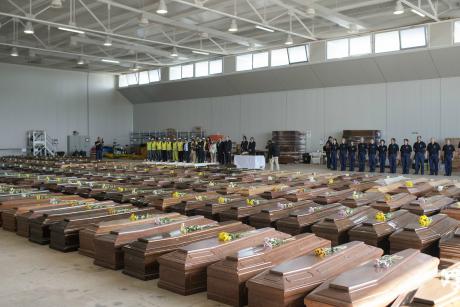
Stephen Bush of the New Statesman has a very important article on “Mare Nostrum” – an Italian government policy given EU backing, providing search-and-rescue operations for illegal migrants crossing the Mediterranean sea.
The scheme has saved over 150,000 refugees’ lives. But, says Bush:
the cost to the Italian government – close to €9m a month – far outstripped the European subvention, and other member states, facing pressure from anti-immigration sentiment at home, were reluctant to continue funding the scheme, including the British government. Baroness Anelay, a Conservative minister at the Foreign Office, told the House of Lords that there were concerns that continuing the rescue operation could be a “pull factor”, drawing more migrants to make the dangerous journey.
People are dying. And we don’t know about it because it doesn’t fit the narrative. This is the real impact of anti-immigrant sentiment. So next time you look at Nigel Farage and see a sweaty, inconsequential buffoon, think again. His agenda brings death to our continent and shame to our nation.
This is the second in a series of posts attempting to answer questions and comments put to me by family and friends around the General Election. The focus this time is on education. Two friends asked very similar questions, which can be summarised thus:
What’s your take on the education policies of the major parties, and what impact might they have?
This is a pretty broad question! First of all, “education” means different things to different people. But usually, when people talk about education, though, they’re meaning state schools, so I’m addressing that. If you want me to take on further and higher education, just let me know in the comments.
What do the parties propose?
With two manifestos now published, we have a very good idea of what Labour and the Tories would do in education. You can find a fuller list by either reading the relevant manifestos (here and here), or by consulting the BBC’s updated policy guide here. However, I tend to cut education policy differently to most people so my own summary follows!
Funding
The schools budget has been “relatively well protected” over the past five years, but that looks likely to change slightly in the period 2015-2020:
The Conservatives say they will protect funding per pupil in real terms
Labour say they will protect the entire 0-19 education budget in real terms
The Lib Dems say they will protect the entire 2-19 education budget in real terms
These all sound quite positive. “Real terms” means that the parties are going to take inflation (rising prices, a normal part of any economy) into account, and increase spending at least by the same amount to compensate. But the Institute for Fiscal Studies, a prominent economic think tank, has said that the impact might actually be negative overall, because these pledges don’t fully factor in other things such as increasing pupil numbers and staff wages.
Structural Reform and New Schools
There’s been substantial change over the past five years with the Academies Act fundamentally altering the schools sector, at least in the secondary age range. The parties’ pledges mostly respond to this in some way:
The Conservatives want to continue the “academisation” of the secondary schools sector, by forcing failing and coasting schools to convert. They also want to open at least 500 new free schools (270,000 places) – these are new academy-type schools. They’ll also parachute high-achieving headteachers into failing schools, if Ofsted says they require improvement and don’t have a good enough plan.
Labour want to extend the freedoms available to academies and free schools to all schools, provided they are appropriate. They also want to introduce “Directors of School Standards” as a new way of monitoring school performance and intervening to improve it. They will also be responsible for commissioning new schools. They say they will end the Free Schools programme and use the funding to cap class sizes. Private schools will also be required to partner with state schools in order to continue to receive business rate relief.
The Lib Dems’ policies will focus on greater collaboration and partnership between schools including, potentially, a new accountability model for academies. They would also set up an independent education authority to set the curriculum and monitor standards. They plan to open new schools only in areas with a shortage of places. They would also allow Ofsted to inspect academy chains.
Teaching
Teaching is obviously a key area for schools policy and the parties have made some specific pledges here:
The Conservatives will create an independent College of Teaching to promote high standards. They’ll also reduce paperwork, introduce further bursaries for in-demand subjects, expand Teach First, and pay good teachers more.
Labour want to ensure that all teachers in state schools are qualified. They also want to introduce a “Master Teacher” status for experts in their subject. They would also create a new College of Teaching, and will support Teach First. They would also create a new School Leadership Institute.
The Lib Dems would prevent unqualified teachers in state schools, starting with academies and free schools from September 2016. They’d require a B grade in Maths and English GCSE for new teachers. They’d establish a Royal College for Teachers that would set professional standards.
What will the impact be?
The impact on schools, regardless of who’s in power, will probably be a continuing need to restrain spending. That might mean restricting pay increases for teachers. Given there is already something of a crisis in teacher recruitment, and given a lot of teachers leave the profession each year, that could be a serious problem, especially as the number of pupils is already rising significantly. In turn, that might lead to even more pressure on class sizes. So it’s going to be challenging to maintain standards.
A further wrinkle is the fact that further funding reform is likely. The coalition government was aiming to change the national funding formula so that it was more uniform across the country: there are serious historical problems with the current formula which have meant some areas losing out massively compared to others. The question will be whether a new government can do this without taking money out of some schools’ budgets. They’ll be keen to avoid that but it might be very hard to achieve.
You’ll probably have noticed that there is actually a lot of overlap on many of the policies outlined by the parties. That’s because there’s really quite limited disagreement on the big questions of education policy. It’s universally agreed, for instance, that schools should have more independence and freedom to make their own decisions; that teaching should be considered a “profession”, with all that that entails; that funding should be protected; and that there should continue to be attempts to increase accountability and improve standards – if necessary through quite drastic interventions.
Teachers who yearn for a quieter life aren’t going to get it; there’s probably going to be as much pressure, if not more, under any colour of government from 2015 onwards. On the plus side, there will probably be more jobs to go for as schools expand, the recruitment crisis deepens, and pay differentials become more pronounced – in particular, academies are likely to be fighting hard to hire the best staff.
As such I’d expect to see a continuation of the current trends. I don’t think anyone should expect the kind of revolution we’ve had in the past five years, with radical changes to almost every aspect of school life – curriculum, oversight, standards, targets, and the rest. It’s generally acknowledged that there’s been a lot of change; letting that bed in, perhaps with some tinkering around the edges, is likely to be the order of the day from 2015-2020.
Politicians often talk about “governing for the whole of the country”. This is seen to be the desirable outcome of the democratic process: a system that, as some American guy put it, creates “government of the people, by the people, for the people”. The most successful politicians in modern-day politics are those who convince voters, in large numbers, that they are truly committed to such a goal. It usually turns out that they aren’t, but sometimes that takes a long while, or there isn’t an obvious departure from that apparent commitment. This was the case for Tony Blair, and I’d say it’s also been the case for Barack Obama, despite more obvious checks and balances preventing him from fulfilling his mandate.
Tomorrow will see David Cameron and his Conservative Party decisively reject the idea of governing for the whole of the country. Of course, they have rejected it many times previously; it just so happens that they’ve had a decent check and balance, the Liberal Democrats, preventing them from running amok governing like true Tories.
But tomorrow they unveil perhaps their most nakedly offensive policy yet. Housing has once again slipped down the political agenda during this election campaign, which is a shame as it had appeared to be rising in importance. It had even precipitated something of an arms race between the parties, with competing pledges on the number of houses they would build over the next Parliament. None of them were remotely realistic, but there appeared to be an emerging consensus on the importance of increased supply in a property market that is defined by extreme scarcity and extreme demand – a combination which has led to rocketing house prices, even in parts of the country that aren’t London.
Against that backdrop the Tories have kept announcing policies that actually stimulate demand further. These have included things like NewBuy, Help to Buy, Help to Buy 2, Help to Buy ISAs, and an expansion of Right to Buy. The clue’s right there in the name: the Tories have focused all their attention on demand-side policies. The fact that the Lib Dems have let a lot of these things happen is probably the single worst area of our record in government. I don’t make any bones about that.
But now the Tories want to go a step further. They want to extend Right to Buy to social housing tenants. This is a policy that runs counter to everything that defines the UK property market. It is going to give a right to buy social housing at a discount to people who already benefit from cheaper rents. It is going to increase demand and reduce supply. It is going to slap 9 million people living in the private rented sector directly in the face.
It is also deeply problematic, for the simple reason that it will mean a huge amount of government intervention in the social housing market. Effectively it removes at a stroke the idea that housing associations are autonomous organisations, able to develop their own assets and manage them in a sensible way. It is, in other words, a top-down, command-and-control, Soviet-type policy; it just so happens that it moves huge amounts of wealth from public or quasi-public hands into private ones, rather than the other way around.
It is the worst policy so far announced in this campaign. That is saying something given the number of desperate pledges being thrown around on all sides. The Tories should be ashamed, but sadly, instead, their voters will be applauding this grotesque and vile attack on a decent society.
EDIT: It seems people agree with me, based on the response to this tweet, too:
Right to Buy for social housing tenants is literally the worst housing policy you could devise for the UK’s property market.
This is the first in a series of posts attempting to answer questions and comments put to me by family and friends around the General Election.
I’m a member of the Liberal Democrats, so obviously I have some political bias. But one of my main principles is a commitment to democracy and the idea that voters should have access to as much information as they want in order to make better decisions.
Crucially, that information needs to be accurate and political parties need to be transparent, if we are going to get results that accurately reflects the will of the people. It’s a shame that much of the activity at election time – from most, if not all, of the parties – aims to obscure rather than clarify the facts, confusing people with claim and counter-claim.
Anyway, the objective here is to answer the questions as openly and neutrally as possible – my political bias having been declared.
The first question is:
If I want to find out about all the issues that policies relate to (e.g. free market, inheritance tax, etc), where are the best places to do that?
This is one that comes up a lot. What tends to happen at election time is that even media outlets become more partisan. We’ve already seen this, for example, in the way the Tory press has been attacking Ed Miliband, but you can also see it in the way that different papers cover the same poll, or the attention given to different policy announcements.
As a political consultant this is something I have to work hard to do. Much of my job is interpreting the grey areas left by policy announcements, or sifting through the commentary to find the nuggets of real interest. I appreciate that most people don’t have the time to do the same. So here are some simple tips:
Go to the original source. If a policy is being announced, it will be “spun” by different media outlets to emphasise different things. The best way to avoid this is to read the original announcement. Usually that will mean finding the relevant press release on a party’s website. (Unfortunately, political parties also put spin on things – so you still have to be wary. But at least you know there’s only one layer of spin to cut through now.)
If that’s too much effort, then reading different stories on the same policy will help you to get a sense of how it’s being interpreted to fit other people’s agendas.
If that’s still too much effort, then I’d recommend finding a good, relatively neutral policy guide. Generally speaking, the BBC is pretty good at avoiding spin, and their policy guide is as comprehensive as any out there.
There are also some good, relatively neutral organisations dedicated to fact-checking statements and claims by politicians. Two particularly good ones are Full Fact and Channel 4’s FactCheck Blog. These often move rapidly with the news agenda, meaning that they will often respond well to current stories and help you unpick things.
Hopefully that’s helpful – but feel free to continue the debate in the comments!
There’s a little meme doing the rounds on my Facebook where people are posting up lists of the five worst bands to have had major success. I thought I’d join in. The danger of this, of course, is that you peeve a lot of people who consider these bands to have secured that success deservedly. But I laugh in the face of such danger.
I’ve defined “worst” not merely in terms of bare output, but also in terms of the legacy they have bequeathed, and particularly the influence they have had on other bands – most of whom have been considerably worse than the original. It doesn’t mean, then, that I consider these the worst five bands to have achieved commercial success full stop.
So here you go, without further ado:
1. The Velvet Underground
The only difficulty here was whether they had “major success”. Obviously they didn’t make much of an impact commercially while they were active, but I imagine that the royalties they’ve accrued over the 40-odd years since they stopped have been fairly substantial.
I quite like the Velvet Underground, but listening now to the barrel-house clatter of “I’m Waiting for the Man”, it just sounds amateurish, especially when you consider it was released in the same year as Sergeant Pepper, Axis: Bold as Love and Forever Changes. The beauty achieved by the band on tracks like “Candy Says“, if it had been replicated, would have made them something more. But if you want that, you have to look at John Cale’s solo work.
The impact of the band is legendary. In short, this was where rock music left behind its roots in blues and jazz and do-wop and became something dominated by skinny white boys. It was where lyrics became dominated by neurosis and tension, and the music, far from being a release, became something just as often sinuous and constricted, with singing that sounded so casual it was almost comatose, and spindly, droning guitars. On balance, they belong in this list, for sure.
2. Sonic Youth
It’s probable that even now, many fewer people have heard of Sonic Youth than the Velvet Underground. So, again, there was a question here over whether their success was sufficiently “major” to merit inclusion in this list. Sonic Youth represent a strand of American rock that encompasses hardcore punk, noise rock, and no wave, which eventually gave birth to the full flowering of “alternative rock” that subsequently became the mainstream, or something approximating it.
The problem is that their music largely isn’t very good. Take “Teen Age Riot“, for example, the lead single from Daydream Nation – often regarded as their most successful album. It has an endearing sense of energy to it, and a structure that approximates something akin to what we would expect of a modern rock song, but it’s hard to hear it as anything other than a quite joyful messy jangle. When I tell you (assuming you aren’t a Sonic Youth aficionado) that this is probably their most accessible single, and that it’s actually a lot less challenging than the majority of their output, you might get a sense of the failings of this highly influential but painfully overrated band.
3. The Sex Pistols
The band that released only one album, inferior to many other contemporary works even within their own genre. The same year, 1977, saw David Bowie put out both Low and Heroes; The Clash had put out their own eponymous debut album in April.
Yet Never Mind the Bollocks, Here’s the Sex Pistols remains a classic to this day. Each time I put it on – which isn’t very often – it sounds phoney to my ears. Perhaps it’s knowing that Sid Vicious, the man recruited to replace the only “middle-class” member of the band, Glen Matlock, couldn’t even play a note; that Matlock was drafted back in for the recording sessions. Or maybe it’s the highly muscular sound of the Pistols, which in one sense compares favourably to the scratchiness of the Clash or the Jam, but in another feels… dare I say, glammy?
I think the worst thing about the Pistols was the fact that they convinced everyone they were thicker than they were. The lyrics are often witty, sardonic and cutting; the musicianship is far more accomplished than the champions of the punk aesthetic would have liked to admit. Listening to Never Mind the Bollocks now, I get the uncomfortable sense I’m listening to a band jumping on a bandwagon, and certainly not one starting a movement.
4. Joy Division
Following neatly on from the previous entry, Joy Division were formed immediately after a Sex Pistols gig. But they soon outgrew their punk roots and developed a sound that was far darker and more complex. They were a truly “post-punk” band, relying on new instrumentation and production, and led by Ian Curtis’ troubled personality, dogged by depression and epilepsy.
That aspect of Joy Division is why it often feels cheap to criticise them, even though on the other side of things it arguably explains the cult-like status afforded to their two albums. The first, Unknown Pleasures, has become a defining artifact of British popular culture; the sort of album whose cover now graces a million tee-shirts worn by people who probably can’t name a single song on the record. (They might suggest “Love Will Tear Us Apart“, but that famous single featured on neither of the band’s long cuts.)
But it is precisely the themes of alienation, darkness, despair, etc, that make Joy Division so difficult to listen to. As a teenager I really tried to like them. Even now, I admire them, and recognise the power of their sound and what they achieved. But ultimately it isn’t for me, and it worries me when I see others obsessed with them. Their contemporaries U2, who are much-maligned, represent a better and more optimistic side of the post-punk movement; one that didn’t close in on itself but kept an open mind and offered an open heart to the waiting world.
5. Coldplay
The worst thing about having gone to University College London is that I was aware all through my time there as an undergraduate that a few short years before this was where Coldplay had begun.
They started out as a decent enough post-Britpop band. Taking their cues from Radiohead, Jeff Buckley and especially Travis, they ploughed an honest furrow purveying average-to-good songs, which occasionally featured piano (hey! different!) and always featured “soulful” vocals and lyrics that shot for profound but always landed on pretentious.
Somehow, though, this became so monumentally popular that they had to innovate. After the good Parachutes and the decent A Rush of Blood to the Head – both of which I enjoyed at the time, as pleasant enough records – they began to reach. On their third album, X&Y, it became apparent that they had run out of real melodic ideas and had settled, instead, for piano riffs that verged on ringtones and straight plagiarism from true visionaries – most painfully, lifting the jingly, instantly recognisable intro to Kraftwerk’s “Computer Love” for the awful sub-U2 earnestness of “Talk“.
The less said about the later albums the better. When a band has to find a new wardrobe to go with a new record, it’s never a good sign – unless you’re David Bowie. And let’s just bask in Wikipedia’s synopsis of Mylo Xyloto:
Mylo Xyloto is a concept album and a thematic rock opera.The album tells the story of a war against sound and colour by a supremeist [sic] government, set in the world of Silencia, an Orwellian society. Silencia has been taken over by a supremacist government, led by Major Minus, who controls the population through media and propaganda.
Their collected output makes me feel like Ethan Hawke here:
Finally, it should never, ever be forgotten that Coldplay were originally called Pectoralz. I’m just saying.
Today the Tories have made my previous blog post on the NHS slightly obsolete, by officially pledging to find the extra £8 billion per year the NHS says is required to safeguard the service by 2020. Obviously there are some problems with the practicalities of that pledge. You can read about those anywhere you like: here, for example.
It’s clear to me that Labour should really have nothing to say on this though. There are several reasons for that:
1. Labour still hasn’t taken responsibility for the party’s contribution to the state of the UK’s economy in 2010. That doesn’t mean I buy into the narrative the Tories (and the Lib Dems to an extent) have painted, that says “forget the enormous global financial crisis- it was all Gordon Brown’s fault”. But it is true to say that the Labour government was running deficits before the crash, and stimulating unsustainable levels of consumer debt (particularly around the property market), and it’s also true to say they were warned – many times – by people who foresaw what was to come. Here’s an example, from 2003:
On the housing market, is not the brutal truth that with investment, exports and manufacturing output stagnating or falling, the growth of the British economy is sustained by consumer spending pinned against record levels of personal debt, which is secured, if at all, against house prices that the Bank of England describes as well above equilibrium level?
In case you’re wondering who asked that – it was Vince Cable, in the House of Commons, asking the then Chancellor, Gordon Brown.
2. Labour planned not to protect NHS funding in 2010. This is a key point, and something that is seemingly entirely forgotten. The Lib Dems took the same view, in fact; it was only the Tories that committed to real-terms increases in NHS funding – something that has been delivered.
It is therefore entirely disingenuous and wrong of Labour to scaremonger about the level of funding the NHS is likely to receive under a Tory-led government. To scaremonger, for example, by putting up posters like the one below. Bear in mind that this is the party that has been so keen to take the moral high ground over “negative campaigning”. The hypocrisy is staggering.
3. Labour still hasn’t committed to giving the NHS the funding it needs to survive. Under Labour’s plans the NHS would get only an extra £2.5 billion a year, well short of what the NHS itself says it needs. Today they are decrying the Tories’ pledge as “fantasy funding”. Yet only a couple of weeks ago, their main political goal was to get the Prime Minister to rule out various tax increases – something that rather blew up in Ed Miliband’s face at the final PMQs of the Parliament, and meant Ed Balls had to rule out NI increases similarly hastily.
If you want to talk about fantasy funding, maybe don’t waste time on tactical manoeuvres that will narrow down the options available to any government to raise revenue – revenue that needs to be put into vital public services such as the NHS.
Jackson Browne wrote “These Days” when he was sixteen years old. That is a fact that never fails to stop me short and wonder what I’ve been doing with all the hours God sends.
But the version he recorded with Nico is the best. The unusual combination of a classic finger-pickin’ style guitar, but played on an electric, mixed with strings and flutes that stay just the right side of maudlin, plus Nico’s oddly flat delivery, should make it something of a clash. But actually the lyric would be too folksy were it not for her detached cool, and the arrangement too smothering without her earthiness.
These days I seem to think a lot about the things that I forgot to do
I’ve just finished watching the Scottish leaders’ debate on the BBC. I missed last night’s, but from what I saw on Twitter and in newspaper commentary, tonight’s had some similar themes.
Compared to the UK-wide, 7-way leaders’ debate last week, there were some very striking differences. The first was the general tenor of the debate: for the most part, despite the presence of a highly disagreeable UKIP MEP, there was a tendency towards plain speaking and even a willingness to meet straight questions with straight answers. This made for some of the interesting moments and occasionally policy apparently being made on the hoof.
This leads me to the second and most important point. Nicola Sturgeon, fresh from her “victory” last week, where she effectively played the role of Nick Clegg circa 2010, was under serious pressure at three key points tonight.
Firstly, on the issue of a second referendum, she effectively admitted that this would depend on shifting public opinion – implying that polling might be enough of a trigger for the SNP to push for another plebiscite. More sensible was her suggestion that an EU exit might be a suitable trigger for a referendum, a position with which I have far more sympathy.
Secondly, and very significantly, Sturgeon came under heavy fire for her support for “full fiscal autonomy” for Scotland. Short of a referendum, this is the obvious next-best policy for the SNP. The trouble is that it would create economic chaos overnight, a point made by almost everyone else on the panel. Sturgeon had no answer to this and at one point looked almost Cameronian, her face rapidly reddening and her temper clearly fraying.
Thirdly, she was put under real pressure over Trident. Ruth Davidson, the Scottish Tory leader, did a great job of putting her on the spot with what was a genuinely forensic question, pointing out that while it was one thing for SNP MPs “not to support” Trident renewal, it would be another for them to commit to voting against it no matter what. Sturgeon again was forced to make an immediate policy decision, stating that her MPs would indeed vote against Trident renewal. This is a highly significant issue as the Main Gate decision on Successor is due to be taken in 2016. Sturgeon prayed in aid the Fixed Term Parliaments Act, suggesting that even if a minority government were to lose a vote on such a significant issue as the defence of the realm, it would not constitute a vote of no confidence. I am not so sure, and neither are many constitutional experts, but it is another indication of the likely importance of the Act in determining the stability of the post-2015 government.
As for the rest of the panel, I felt Jim Murphy was too aggressive, often shouting over other people (particularly Ruth Davidson and Nicola Sturgeon). He did well to challenge the UKIP MEP on immigration, but the fact that he represents a party that has entirely pandered to the demonisation of immigrants made that sound a bit hollow. Willie Rennie did a good job when given the chance, but probably didn’t intervene enough in what was a lively debate. I actually thought Patrick Harvie for the Greens was very articulate and did fairly well – his only real rabbit-in-the-headlights moment was when he was asked whether he was saying the Green Party wouldn’t support any capitalist government by James Cook, the BBC host! For a moment it seemed Harvie was channelling Natalie Bennett’s disastrous freeze on LBC the other week, but thankfully he recovered himself after a short interval.
A final, general comment: the debate was, broadly, both more entertaining and of a better quality (in terms of policy and straight talking) than the UK-wide equivalent. The Scottish leaders have much they could teach their Westminster counterparts.

 of what Labour and the Tories would do in education. You can find a fuller list by either reading the relevant manifestos (
 I’m a member of the Liberal Democrats, so obviously I have some political bias. But one of my main principles is a commitment to democracy and the idea that voters should have access to as much information as they want in order to make better decisions.
 Never Cruel Nor Cowardly